
The Hidden Cost of Poor Software Architecture: What Businesses Pay Later
Poor software architecture can increase maintenance costs, slow product development, weaken security, and limit growth. Learn how businesses can avoid these long-term problems.

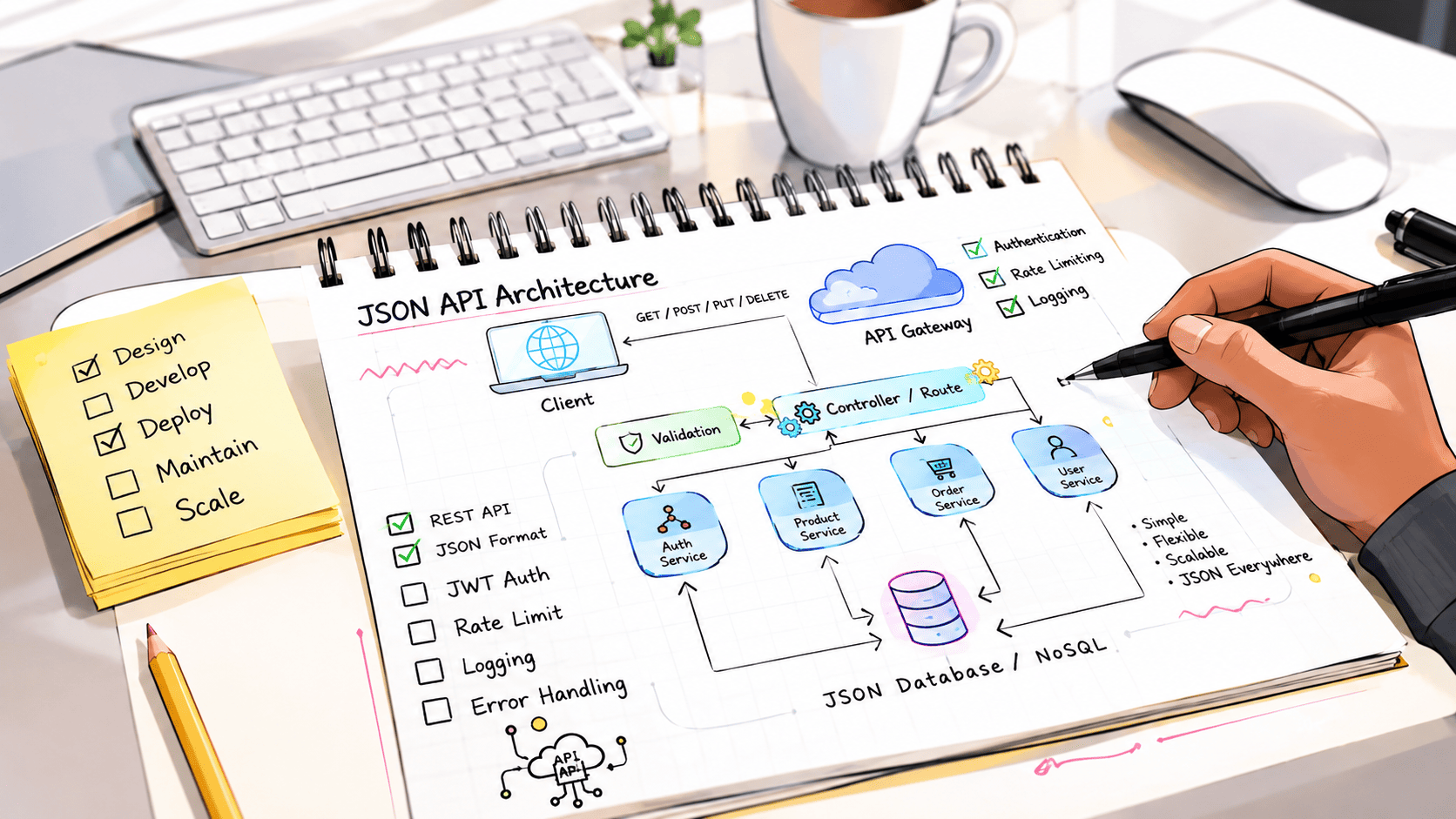
The Hidden Cost of Poor Software Architecture: What Businesses Pay Later
A software product can work perfectly at launch and still become one of the most expensive parts of a business to maintain. The difference often lies beneath the interface—in the architectural decisions that determine how the system evolves.
Introduction: When Working Software Becomes Expensive Software
At the beginning of a software project, success often looks simple: the application runs, the main features work, users can complete their tasks, and the product is ready to launch.
Under pressure to meet deadlines, teams may prioritize visible features over the structure that supports them. Business logic gets mixed into presentation code. Database queries become tightly coupled to specific screens. Authentication rules are repeated across multiple modules. New features are added wherever they are easiest to implement, rather than where they belong.
Initially, these choices may seem harmless. The product ships, customers begin using it, and the business moves forward.
Then growth arrives.
A new feature takes twice as long as expected. A small change breaks an unrelated part of the application. Performance begins to deteriorate as data increases. Developers become afraid to modify code they do not fully understand. What once felt like a flexible product gradually becomes difficult and expensive to change.
This is the hidden cost of poor software architecture.
Architecture is not simply a technical preference or a diagram created before development begins. It is the foundation that determines how safely, efficiently, and economically a software product can grow.
1. What Software Architecture Really Means
Software architecture describes the fundamental structure of an application: how its components are organized, how they communicate, where business rules live, how data flows through the system, and how responsibilities are separated.
Consider a business management application with employee records, attendance, payroll, notifications, and reporting.
A well-structured application establishes clear boundaries between these responsibilities. The interface handles presentation, business logic handles rules and workflows, and data-access components manage communication with the database or external services.
These boundaries do not need to be complicated. They simply need to make responsibilities clear.
In a poorly structured application, a single screen might validate user input, calculate payroll, update multiple database collections, send notifications, and decide which permissions apply. As the application grows, changing one responsibility becomes increasingly likely to affect the others.
The difference is not necessarily visible to the user on day one. It becomes visible when the business needs to change.
Good architecture makes change easier to manage. Poor architecture makes change increasingly expensive.
2. Technical Debt: The Cost of Tomorrow's Shortcuts
Technical debt is the future work and additional cost created when a team chooses a shortcut that makes the present easier but creates complications later.
Not every shortcut is bad. A startup may reasonably postpone a complex optimization until real usage demonstrates that it is necessary. A small internal tool may not require the same architecture as a large, mission-critical platform.
The problem begins when temporary compromises become permanent foundations.
Examples include:
- Duplicating the same business rules across multiple screens or services.
- Storing unrelated responsibilities in a single large module.
- Skipping automated tests for critical workflows.
- Connecting application logic directly to database-specific details everywhere.
- Introducing dependencies without considering their maintenance or security implications.
- Adding features without documenting important architectural decisions.
Each shortcut can save time in isolation. Together, they can create a system that becomes progressively harder to understand and modify.
Imagine a pricing rule duplicated across eight different parts of an application. When the business changes its pricing model, developers must locate every implementation and update it consistently. Missing even one can produce conflicting prices or incorrect calculations.
The original decision may have saved an hour. Correcting the consequences could take days.
Technical debt is not always a reason to stop feature development and rewrite everything. It is a reason to understand the cost of existing compromises and address the most damaging ones deliberately.
3. Slower Development and Higher Maintenance Costs
One of the earliest signs of architectural problems is that development becomes slower even though the team is gaining experience.
In a healthy codebase, developers can identify the component responsible for a behavior, understand its dependencies, make a focused change, and test the result.
In a tightly coupled codebase, even small tasks require investigating unrelated modules, tracing indirect dependencies, and checking whether an unexpected side effect has occurred elsewhere.
The business pays for this in several ways:
Longer delivery cycles. Features that should be straightforward require more investigation, implementation, and regression testing.
Higher maintenance costs. Developers spend more time understanding existing code and fixing problems instead of delivering improvements.
More expensive onboarding. New team members need longer to understand the system because responsibilities and conventions are unclear.
Reduced delivery predictability. Estimates become less reliable when a seemingly small change can expose unexpected dependencies.
For a business, the real cost is not limited to developer hours. Delayed releases can postpone customer feedback, new revenue opportunities, operational improvements, and competitive responses.
A product that is cheap to build initially may become expensive to operate and evolve.
4. Performance Problems That Appear With Growth
An application can perform well with a small amount of data and still struggle when usage increases.
The reasons may include inefficient database queries, repeated network requests, unnecessary data processing, oversized responses, poor caching decisions, or background work that competes with user-facing operations.
Architecture influences whether these problems are isolated and measurable or spread throughout the application.
For example, consider a dashboard that loads employee information, attendance history, payroll records, notifications, and reports through a sequence of unnecessary requests. With a small test dataset, the delay may be barely noticeable. With thousands of records and multiple concurrent users, the same design can produce a frustrating experience.
A better approach starts with measuring the actual bottleneck.
Teams can examine query patterns, pagination, indexes, network latency, caching, workload distribution, and resource usage. They can then optimize the relevant components rather than adding complexity everywhere.
Performance is not achieved simply by choosing a popular framework or an expensive server. It depends on how the system is designed, implemented, measured, and operated.
A scalable architecture does not guarantee unlimited performance. It makes performance problems easier to identify, isolate, and address.
5. Security Risks Hidden Inside Poor Structure
Security problems are not always caused by a missing security product or an outdated dependency. They can also emerge from unclear boundaries and inconsistent responsibility.
Suppose an application checks whether a user is an administrator only in the frontend. Hiding an administrative button may improve the interface, but it does not prevent someone from attempting to call the underlying endpoint directly.
Similarly, if authorization rules are implemented differently across multiple services, one endpoint may enforce the correct restrictions while another accidentally exposes sensitive information.
Poor architectural boundaries can make these inconsistencies harder to detect.
Safer systems establish clear security responsibilities:
- Enforce authorization on trusted server-side components and data-access boundaries.
- Apply least-privilege access to users, services, and credentials.
- Validate untrusted input and handle failures safely.
- Protect secrets from client-side code and public repositories.
- Keep dependencies maintained and monitor relevant vulnerabilities.
- Log meaningful security events without unnecessarily exposing sensitive data.
- Test access controls, including attempts to access resources without permission.
Security cannot be guaranteed by architecture alone. It also requires secure implementation, review, testing, operational discipline, and ongoing maintenance.
However, a well-structured system makes security rules easier to centralize, inspect, and enforce consistently.
6. Scaling Becomes a Business Problem
Scaling does not simply mean adding more servers. It also means handling more customers, more data, more integrations, more complicated workflows, and more demanding operational requirements.
A business application might begin with one organization and later need to support hundreds of organizations, each with separate users, permissions, records, and configurations.
If organization-specific assumptions are scattered throughout the codebase, introducing multi-tenancy can become a major undertaking. The same applies when adding new payment providers, replacing a database, introducing an external API, or separating background jobs from user-facing requests.
Architecture should reflect the product's realistic direction without attempting to predict every possible future requirement.
That means asking practical questions early:
- Which parts of the system are likely to change frequently?
- Which components have clear and stable responsibilities?
- What happens when data volume or concurrent usage increases?
- How will permissions and organizational boundaries be enforced?
- Which external services could fail, change, or become unavailable?
- How can a component be tested or replaced without rebuilding the entire application?
The objective is not to make every component independently scalable from day one. It is to avoid unnecessary dependencies that make future growth disproportionately expensive.
7. Why a Complete Rewrite Is Rarely the First Answer
When developers inherit a difficult codebase, a complete rewrite can appear attractive. Starting again promises cleaner structure, modern tools, and an opportunity to correct past mistakes.
But a rewrite also introduces risk.
The existing system may contain years of business rules, edge cases, customer expectations, and operational knowledge that were never formally documented. Recreating its behavior takes time, and the replacement may introduce new defects before it reaches feature parity.
Meanwhile, the business still needs maintenance, customer support, and new functionality.
A more disciplined strategy begins with assessment.
Identify the components that change most frequently, cause the most incidents, create the largest performance problems, or carry the greatest security risk. Measure their impact and determine whether they can be improved incrementally.
Possible approaches include:
- Extracting duplicated business rules into shared modules.
- Separating responsibilities within the most problematic components.
- Introducing automated tests around critical workflows.
- Improving database queries and access patterns.
- Replacing a problematic integration behind a stable interface.
- Gradually migrating a component while the rest of the application continues to operate.
A rewrite may still be justified when the existing platform cannot reasonably meet essential requirements. But it should be a conclusion supported by evidence, not an automatic response to technical frustration.
8. Choosing the Right Architecture for the Product
There is no universally perfect architecture.
A small application with a limited feature set may work well with a straightforward, modular monolith. A complex platform with independent teams and distinct scaling requirements may benefit from separately deployable services.
A modular monolith can offer clear internal boundaries without the operational overhead of distributed infrastructure. Microservices can provide independent deployment and scaling where justified, but they also introduce network failures, service coordination, distributed observability, and additional operational complexity.
The correct choice depends on the product.
Before selecting an approach, consider:
Product complexity: How many distinct business responsibilities and workflows must the system support?
Team size and experience: Can the team maintain the proposed architecture reliably?
Operational capacity: Is there a realistic plan for deployment, monitoring, incident response, backups, and recovery?
Growth expectations: Which scaling requirements are supported by evidence, and which remain speculative?
Change frequency: Which components are likely to evolve independently?
Budget and timeline: Does the architecture provide enough long-term value to justify its initial and ongoing costs?
For some products, the best decision is to start simple, establish strong boundaries, and introduce more sophisticated infrastructure only when a measurable need appears.
The goal is not architectural complexity. It is architectural fitness.
9. Practical Steps to Reduce Future Architectural Costs
Businesses do not need to solve every architectural concern before releasing their first version. They do need a deliberate process for making and reviewing technical decisions.
Step 1: Define the core business responsibilities
Identify the major capabilities of the product and clarify which components own their business rules. Avoid allowing critical logic to spread unpredictably across interfaces, services, and database operations.
Step 2: Establish clear boundaries
Keep presentation, business logic, data access, and external integrations separated where that separation provides practical value. Use interfaces or adapters when they make changing dependencies easier, not merely to add layers.
Step 3: Make data access intentional
Design queries, indexes, pagination, data validation, and access permissions around real usage patterns. Avoid loading unlimited records or fetching the same information repeatedly without a clear reason.
Step 4: Test the workflows that matter most
Prioritize tests for authentication, authorization, payments, critical calculations, data integrity, and other workflows where failure would have serious consequences. Automated tests help teams change the system with greater confidence.
Step 5: Measure before optimizing
Use logs, metrics, traces, profiling, and database diagnostics to understand actual bottlenecks. Avoid adopting additional infrastructure simply because a technology is popular.
Step 6: Document important decisions
Record why significant architectural choices were made, what alternatives were considered, and which trade-offs were accepted. Concise decision records can prevent future teams from repeating the same investigations.
Step 7: Review technical debt regularly
Maintain a visible list of architectural weaknesses, their impact, and potential remediation costs. Address high-risk or high-impact issues as part of normal product planning rather than waiting for a crisis.
Step 8: Plan for operations from the beginning
Consider deployment, configuration, secrets management, monitoring, backups, recovery, and dependency updates as part of the product's design—not as tasks to improvise after launch.
These practices are most effective when applied proportionately. A small product does not need the processes of a global enterprise, but every product benefits from clear responsibilities, appropriate testing, and thoughtful engineering decisions.
10. The Business Case for Good Architecture
Good architecture requires investment. Teams need time to establish boundaries, test important behavior, document decisions, and review trade-offs.
That investment should not be justified with promises that the software will never fail or require maintenance. No realistic architecture can provide those guarantees.
Its value lies in reducing avoidable costs and preserving options.
When responsibilities are clear, a new feature is less likely to require changes throughout the system. When integrations are isolated, replacing a provider can be more manageable. When critical workflows are tested, refactoring becomes less risky. When performance is measured, optimization can focus on the areas that matter.
These improvements support business outcomes:
- More predictable delivery of new features.
- Less time spent investigating preventable regressions.
- Easier onboarding and knowledge transfer.
- Better visibility into performance and operational risks.
- More controlled security and maintenance practices.
- Greater flexibility when customer needs change.
The return is not always visible as an immediate reduction in the initial development budget. Often, it appears later as work the team can complete without the delays and disruptions that a fragile foundation would have created.
That is why architectural quality should be evaluated across the product's lifecycle, not only by how quickly the first version is released.
Conclusion: Build for Change, Not Just for Launch
The real cost of poor software architecture is rarely a single dramatic failure. More often, it accumulates through hundreds of small compromises: another duplicated rule, another tightly coupled component, another difficult release, another workaround that becomes permanent.
Eventually, the business discovers that the product it depends on has become harder to improve than it should be.
Avoiding that outcome does not require predicting the future perfectly or building the most sophisticated system possible. It requires understanding the product's needs, making deliberate trade-offs, establishing clear boundaries, measuring real problems, and revisiting decisions as circumstances change.
Software is not finished when it launches. It continues to evolve alongside the business that relies on it.
At DevEngine, we believe that thoughtful engineering means looking beyond the first release and considering how a product will be maintained, extended, and operated over time. The strongest foundation is not the one with the most layers or the newest technology. It is the one that supports the product's real needs today while keeping tomorrow's changes manageable.
Build software that works at launch—and remains practical to evolve long after it.
DevEngine — Fueling Your Startup with Custom Software.